IT/OT Governance
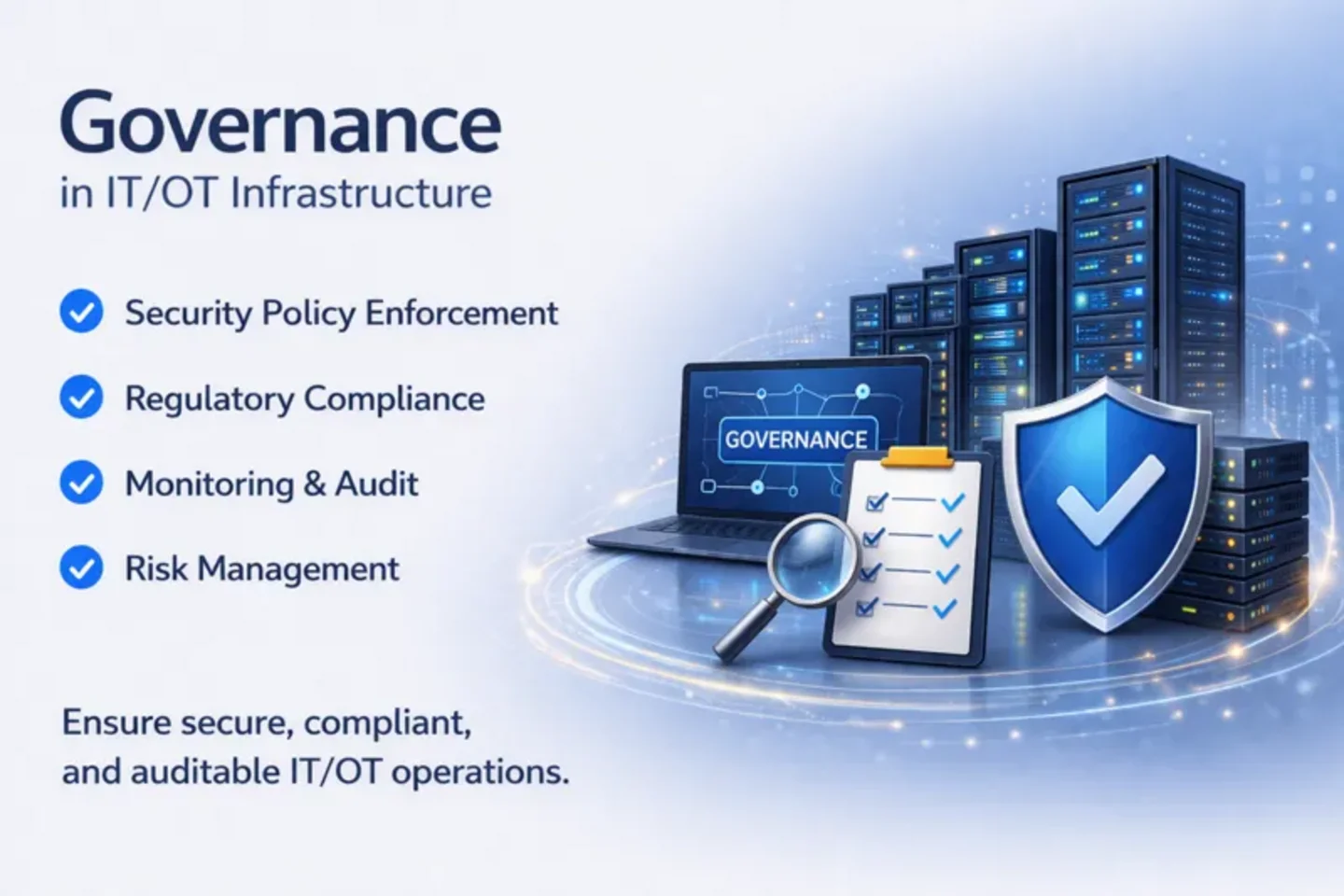
IT/OT Governance ensures centralized control of security, compliance and operational policies.
It provides transparency, traceability and continuous alignment across all IT/OT systems and environments.
As environments become more interconnected and regulatory requirements increase, maintaining visibility and control over system states and changes becomes essential.
Without clear governance, systems become difficult to oversee, risks remain undetected and compliance requirements are harder to meet.
To understand how transparency and control are established, it is important to look at how IT/OT governance works.
What is IT/OT Governance

IT/OT Governance defines how systems are controlled, secured, and aligned with policies.
It ensures systems are operated transparently, traceably, and in compliance with defined standards.
In modern IT/OT environments, governance is a continuous process ensuring control and compliance.
How IT/OT Governance works:
🔹 Central policies: Systems follow defined rules and standards
🔹 Transparency: System states are visible at all times
🔹 Traceability: Changes are documented and verifiable
In complex IT/OT environments, governance provides the foundation for secure and compliant operations.
It connects all Lifecycle phases through control and oversight.
Why IT/OT Governance becomes critical in IT/OT environments
Governance is not just about rules, but about trust, transparency and operational control.
In modern IT/OT environments, increasing system interconnectivity creates higher complexity and new requirements for security, compliance and traceability.
Without clear Governance, control is lost - and operational risks remain invisible.
The impact is immediate:
🔸 Lack of visibility across systems
🔸 Increased security and compliance risks
🔸 Limited traceability of changes
🔸 Unclear responsibilities and approval processes
Industrial IT/OT landscapes consist of multiple operational layers:
🔹 physical infrastructure and edge systems
🔹 operating systems and platform components
🔹 middleware and application stacks
🔹 security policies and compliance controls
Each layer introduces dependencies, operational complexity and potential risks.
Only strong Governance ensures operational trust at scale.
Governance in the IT/OT Lifecycle
Governance ensures that all systems operate within defined policies and compliance requirements throughout their IT/OT Lifecycle.
🔹 System Provisioning: establishes the baseline
🔹 Configuration Management: maintains consistent system states
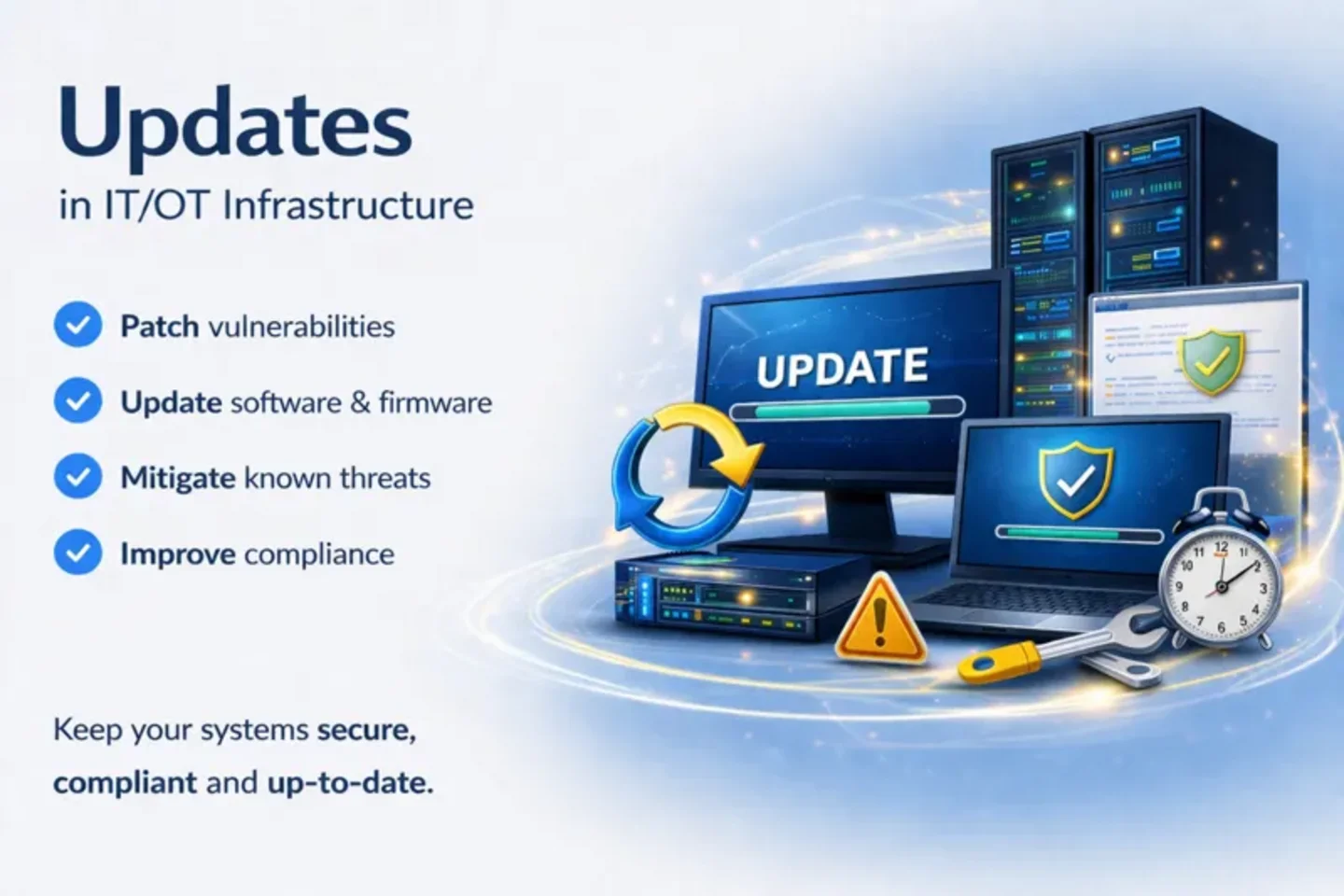
🔹 Update Lifecycle Management: ensures controlled updates
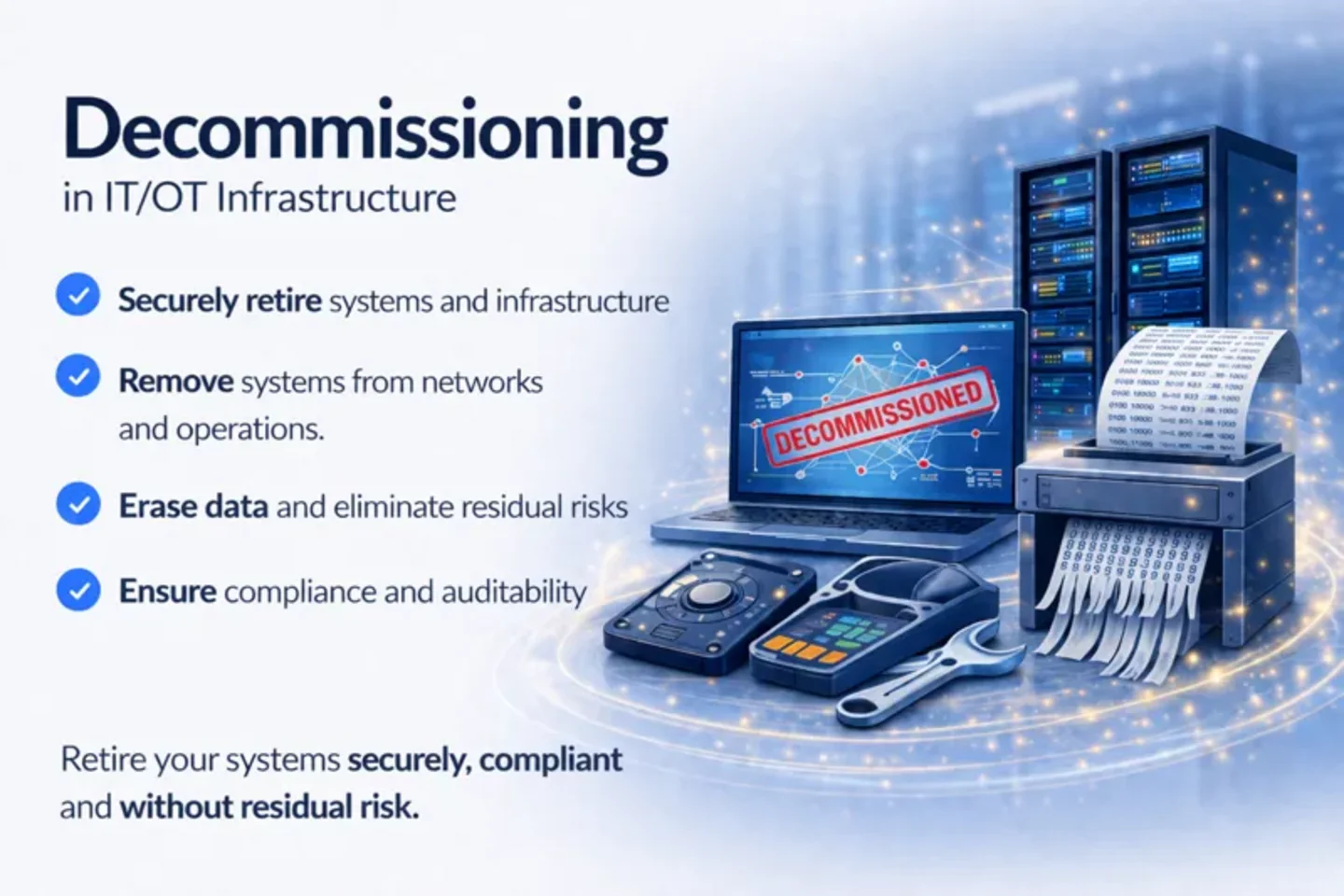
🔹 Decommissioning: ensures compliant system retirement
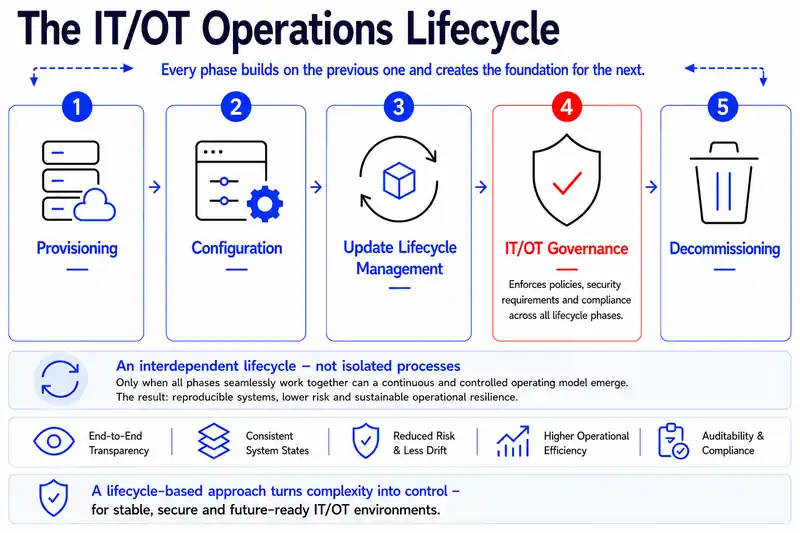
Governance is a continuous and automated process across the entire infrastructure. Policies are centrally defined and automatically enforced across all systems.
Every change and system state is fully traceable, ensuring transparency and auditability at all times. Governance becomes an integrated capability rather than an external control mechanism.
It establishes the operational framework that ensures all changes and Lifecycle activities follow defined processes, responsibilities and approval mechanisms.
This includes:
✔️ Clear ownership of operational actions
✔️ Controlled release and deployment workflows
✔️ Traceability of changes and system states
✔️ Audit-ready documentation of infrastructure operations
✔️ Consistent Governance across the entire Lifecycle
Benefits of centralized Governance
Centralized IT/OT Governance ensures that all systems remain aligned with security and compliance requirements. By continuously enforcing policies, organizations gain full visibility and control over their infrastructure.
👉 consistent policy enforcement
👉 full transparency and traceability
👉 reduced compliance risks
👉 simplified audits and reporting
Governance becomes a proactive capability that supports stable and secure operations.
Result: Full control, compliance and transparency
With lifecycle-driven IT/OT Governance, organizations gain full control over security, compliance and operational standards.
✔️ continuous compliance across all systems
✔️ full transparency of system states and change
✔️ reduced risk of security incidents
✔️ simplified governance and audit processes
IT/OT Governance becomes a core capability for secure, compliant and scalable operations. It integrates with Update Lifecycle Management and Configuration Management to enforce policies consistently across all systems.
Explore the IT/OT Lifecycle
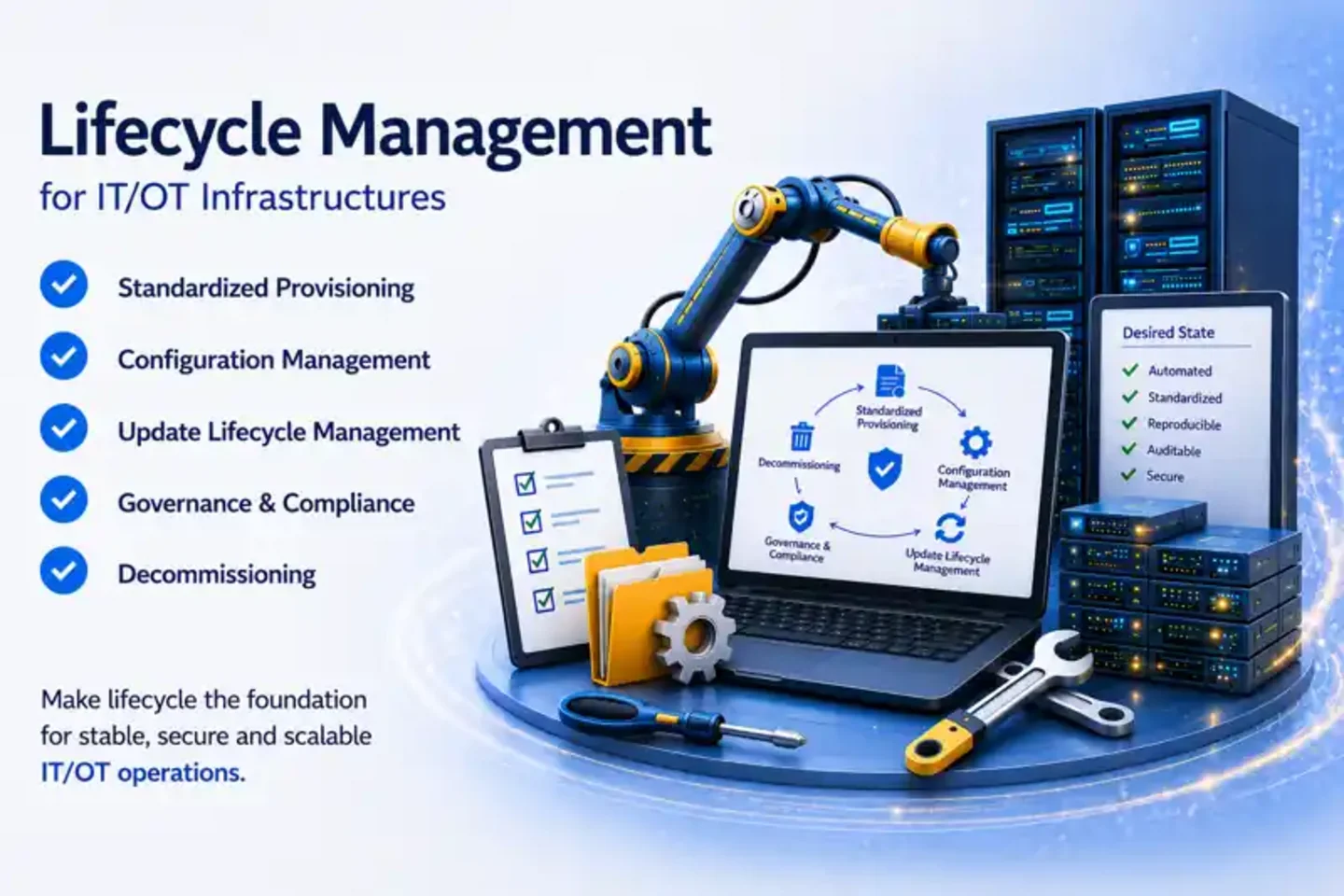
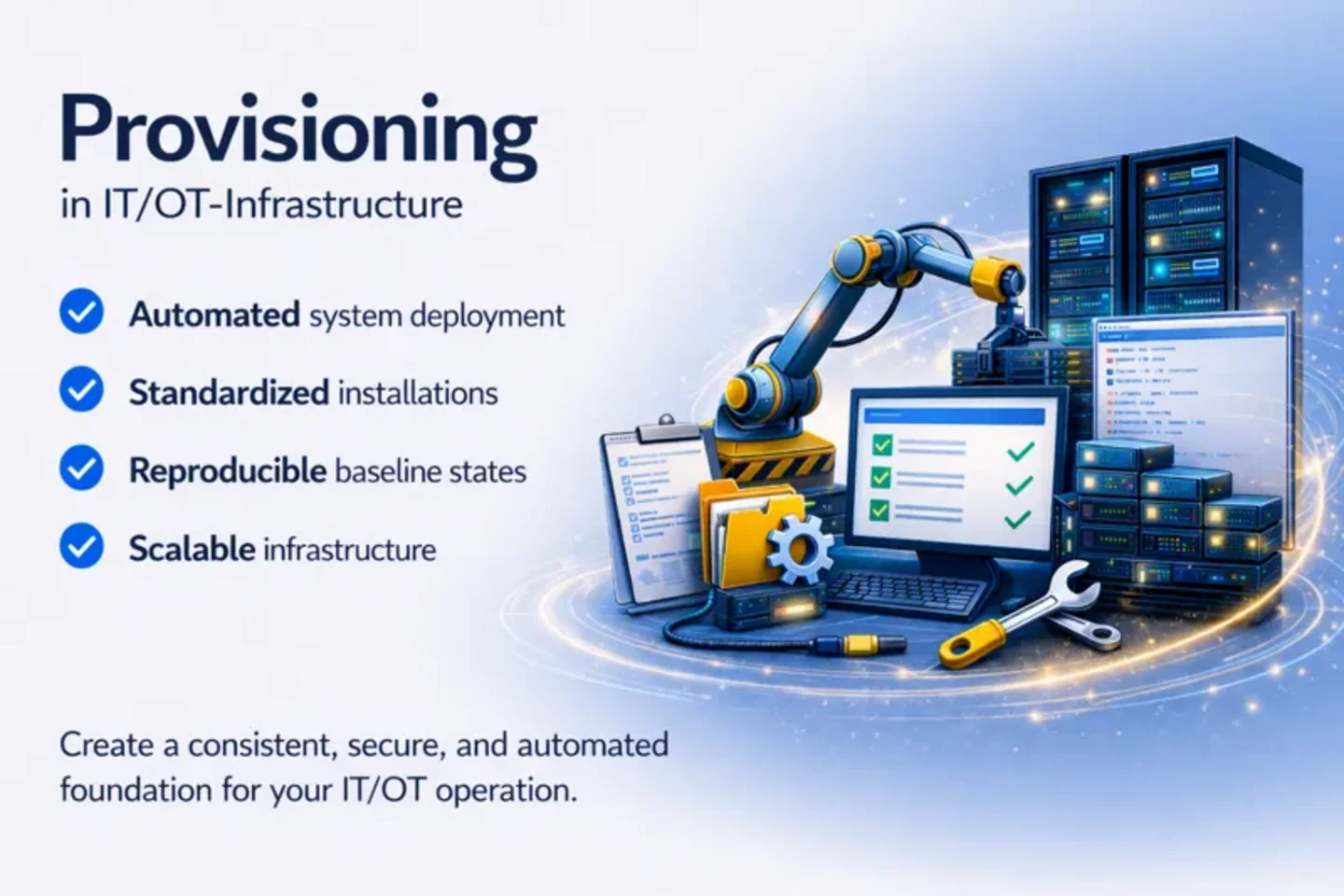
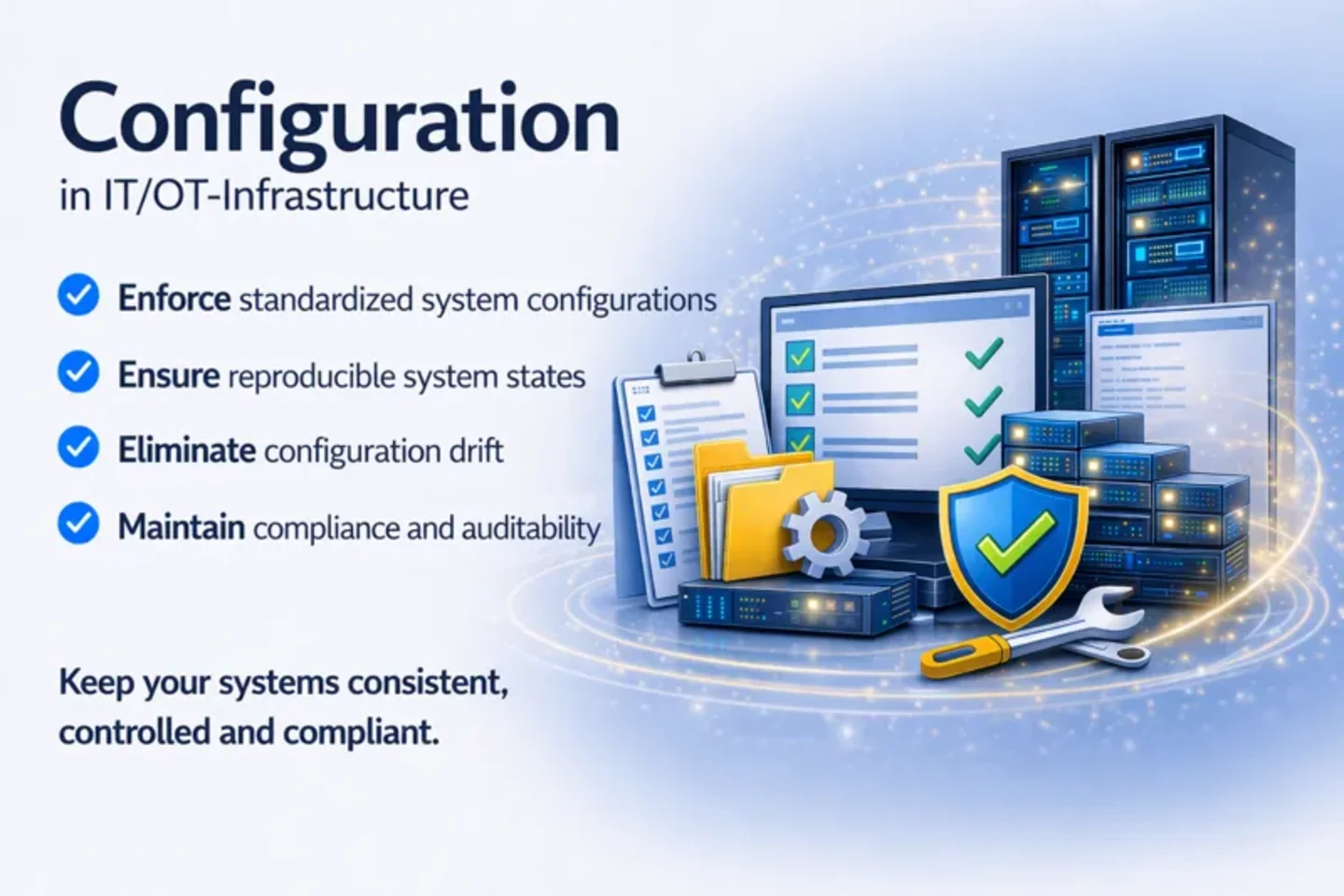
Validate IT/OT Governance - before lack of control becomes a compliance risk
Policies, security standards and compliance requirements can be enforced consistently within your environment.
See how UPTR implements Governance across the entire IT/OT Lifecycle.
Within 30 days, UPTR demonstrates how governance can be automated and transparently applied.
Validate Lifecycle IT/OT Governance ➜
Request an Assessment ➜