Update Lifecycle Management
IT/OT Update Lifecycle Management controls and coordinates updates across systems and infrastructure. It ensures predictable, validated and reversible updates without disrupting operations.
Update Lifecycle Management ensures that changes to IT/OT systems can be implemented safely and without disrupting operations.
In environments where systems cannot easily be taken offline, updates must be carefully planned, validated and deployed to minimize risk.
Without a controlled update process, even small changes can lead to system instability, downtime and security exposure.
To understand how safe and controlled updates are achieved, it is essential to look at how the update lifecycle is structured.
What is Update Lifecycle Management

Update Lifecycle Management defines how updates are structured, controlled, and executed across systems.
Instead of applying updates manually or inconsistently, they are managed as a coordinated and continuous process.
In IT/OT environments, updates are part of an ongoing Lifecycle ensuring stability and security.
How Update Lifecycle Management works:
🔹 Planned rollouts: Updates are deployed in a phased and coordinated way
🔹 Validation: Systems are verified before and after updates
🔹 Rollback capability: Changes can be safely reversed
In distributed IT/OT environments, this enables consistent updates at scale without disrupting operations.
Updates rely on systems provisioned and maintained through earlier Lifecycle phases.
Why Update Lifecycle Management becomes critical in IT/OT environments
Updating systems is not just about patching - it is about controlling risk.
In IT/OT environments, systems often cannot be taken offline easily, and failed updates directly impact operations.
Without a controlled update process, changes become a risk - and downtime becomes reality.
The impact is immediate and operational:
🔸 Unplanned downtime caused by failed updates
🔸 Delayed security patches increasing exposure
🔸 Lack of rollback options in critical situations
Only a controlled, end-to-end update Lifecycle ensures safe and predictable system changes.
Update Lifecycle Management in the IT/OT Lifecycle
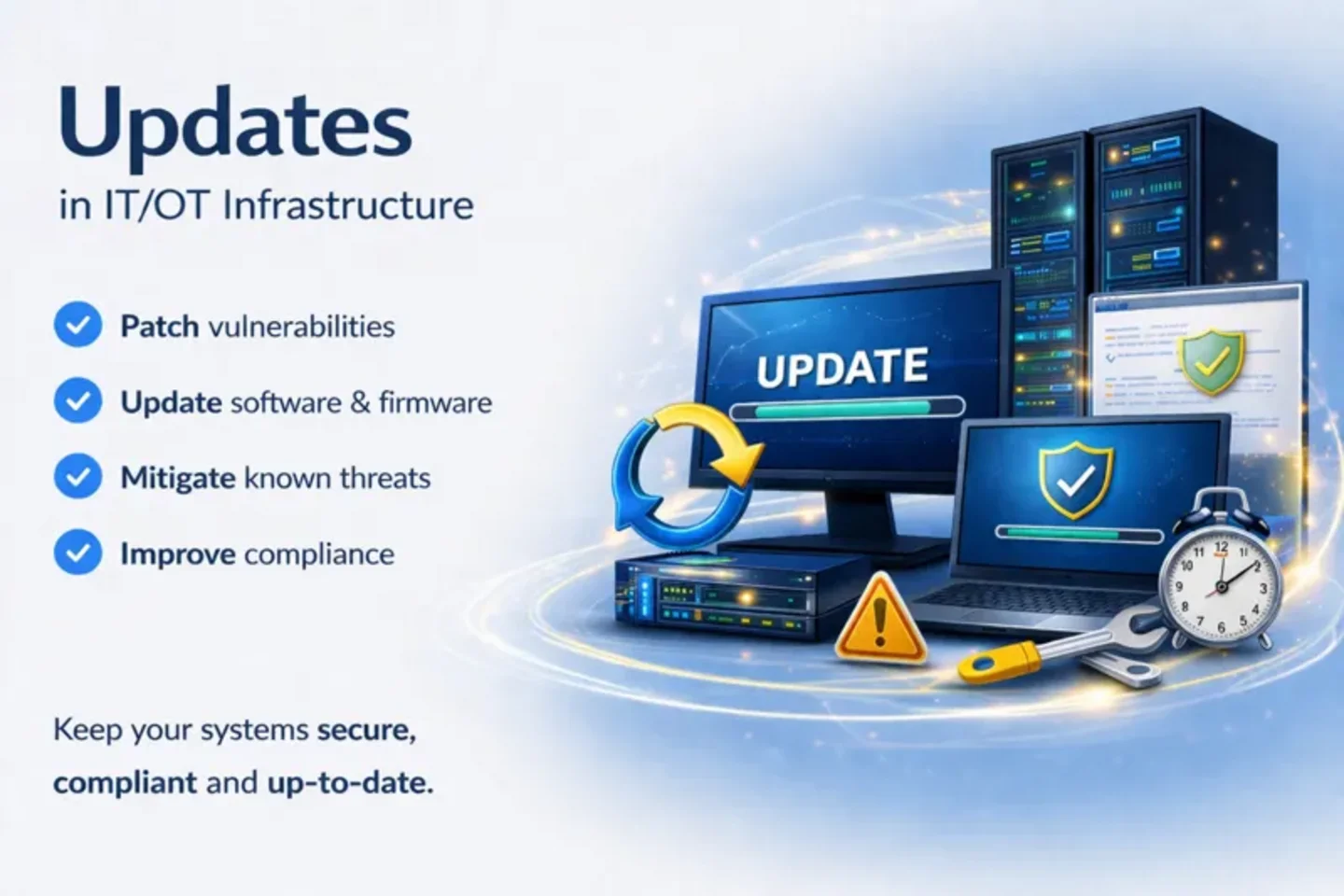
Update Lifecycle Management ensures that systems remain up to date and secure throughout their IT/OT Lifecycle.
🔹 System Provisioning: establishes the baseline
🔹 Configuration Management: maintains consistent system states
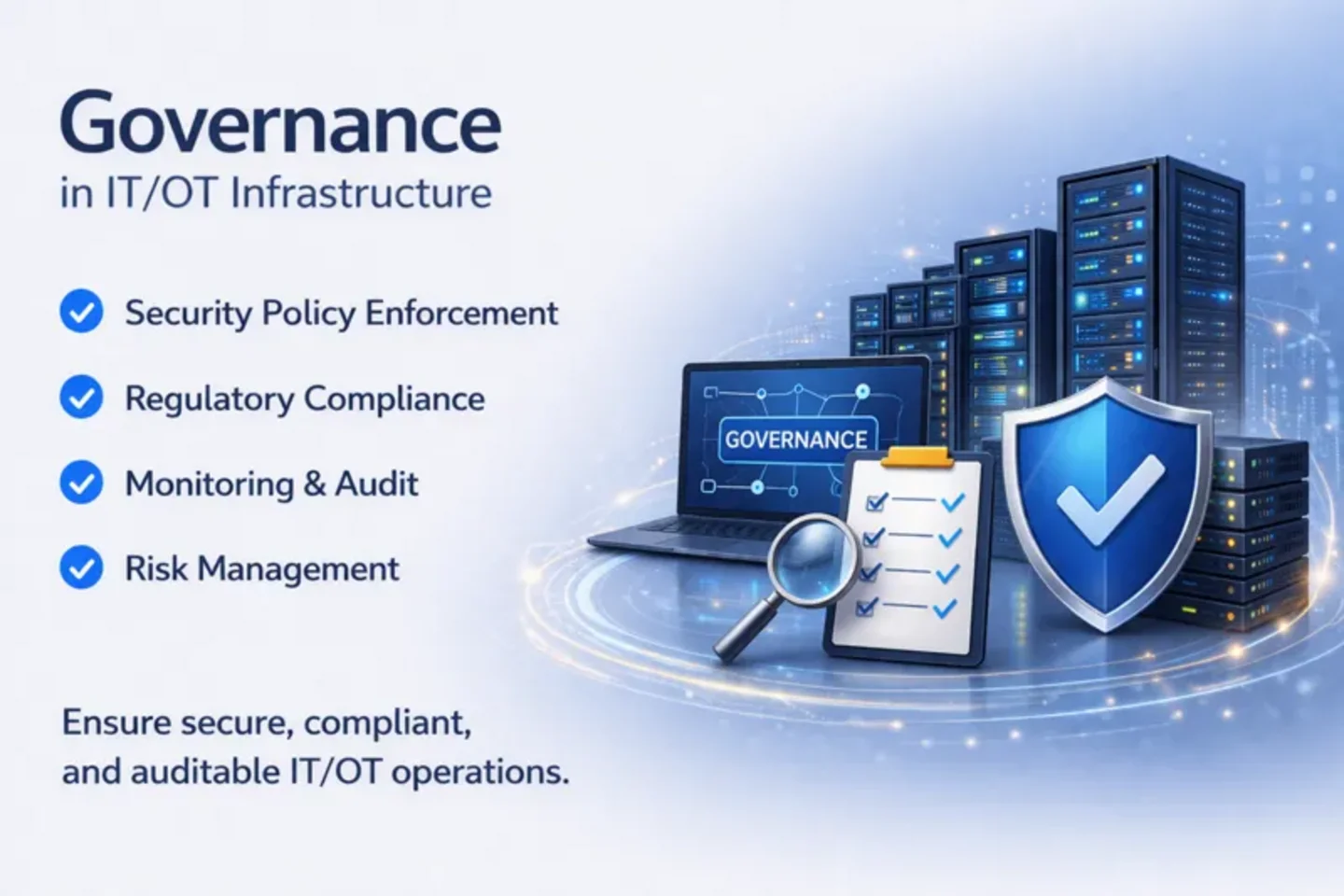
🔹 Governance: enforces policies and compliance
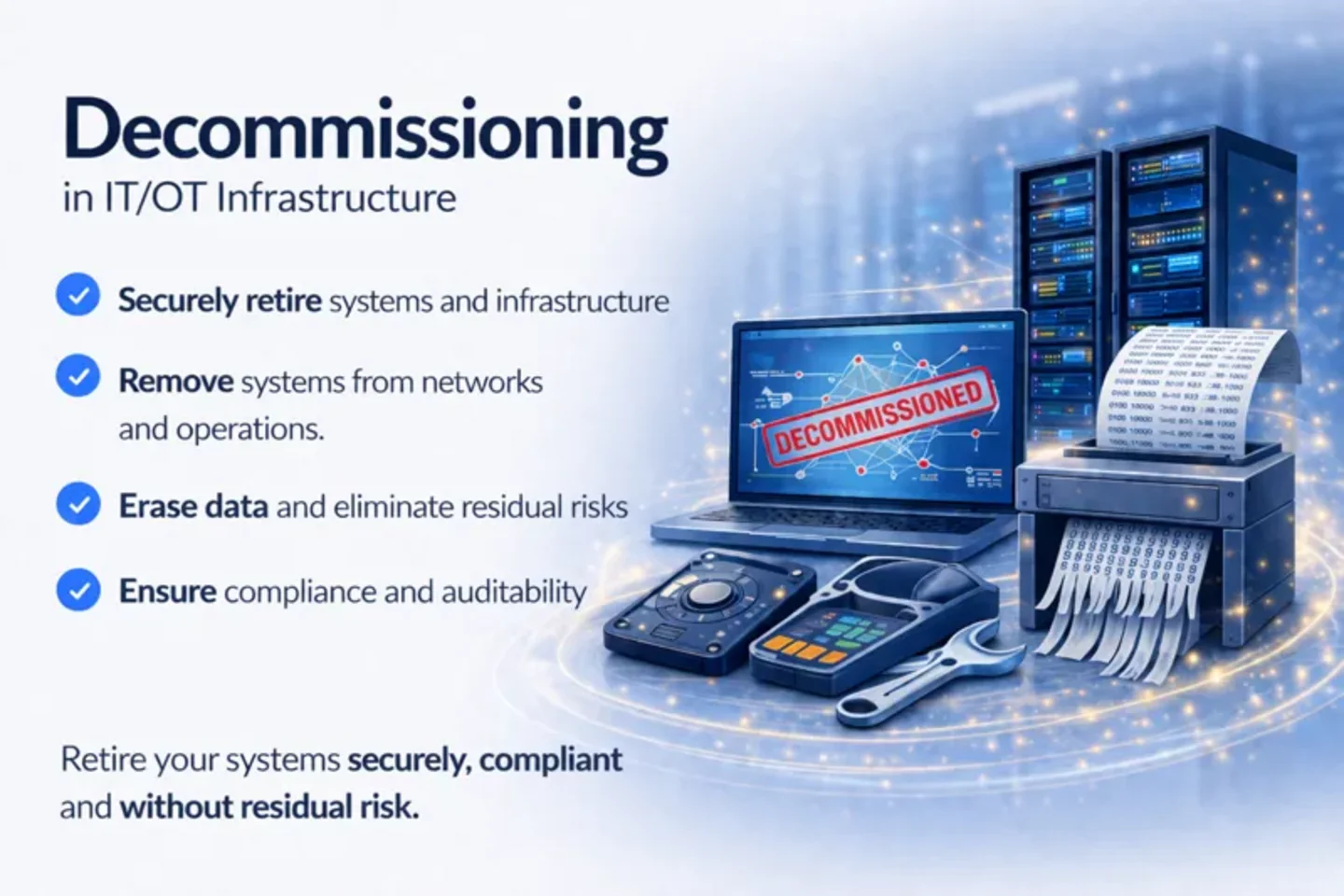
🔹 Decommissioning: ensures controlled system retirement
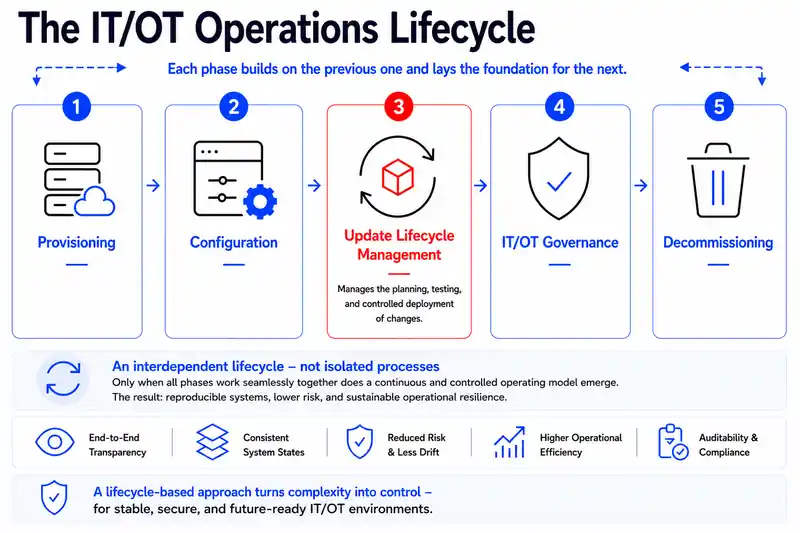
Updates become part of a fully controlled Lifecycle process. Updates are orchestrated centrally, validated before deployment and applied consistently across all systems.
Each update follows a structured workflow designed to ensure traceability, predictability and operational control. Systems remain aligned with a defined desired state, reducing risk and minimizing inconsistencies.
A controlled IT/OT Lifecycle typically requires:
🔹 State-driven infrastructure management ➜ systems continuously align with a defined and approved desired state.
🔹 End-to-end lifecycle processes ➜ from initial provisioning through operation to secure decommissioning.
🔹 Traceability and auditability ➜ every change, version and approval remains documented and transparent.
🔹 Policy-based operational control ➜ governance requirements become part of operational processes.
🔹 Integration across existing environments ➜ tools and processes operate within a consistent operational framework.
Updates are aligned with the desired state defined in Configuration Management and governed by IT/OT Governance policies.
Benefits of controlled Update Management
Controlled Update Lifecycle Management enables organizations to apply updates without disrupting operations. By orchestrating updates across the entire infrastructure, systems remain stable and predictable with
👉 controlled and coordinated updates
👉 reduced operational risk
👉 improved system stability and security
👉 predictable and reproducible update processes
Updates become a manageable and transparent process rather than a source of uncertainty.
Result: Predictable and secure update processes
With Lifecycle-driven Update Lifecycle Management, organizations gain full control over how updates are applied across their infrastructure.
✔️ predictable update processes
✔️ reduced risk of system failures
✔️ improved security and compliance
✔️ consistent system states across all environments
Update Lifecycle Management becomes a critical capability for stable, secure and scalable IT/OT operations.
The Lifecycle concludes with System Decommissioning, ensuring systems are retired in a controlled and compliant manner.
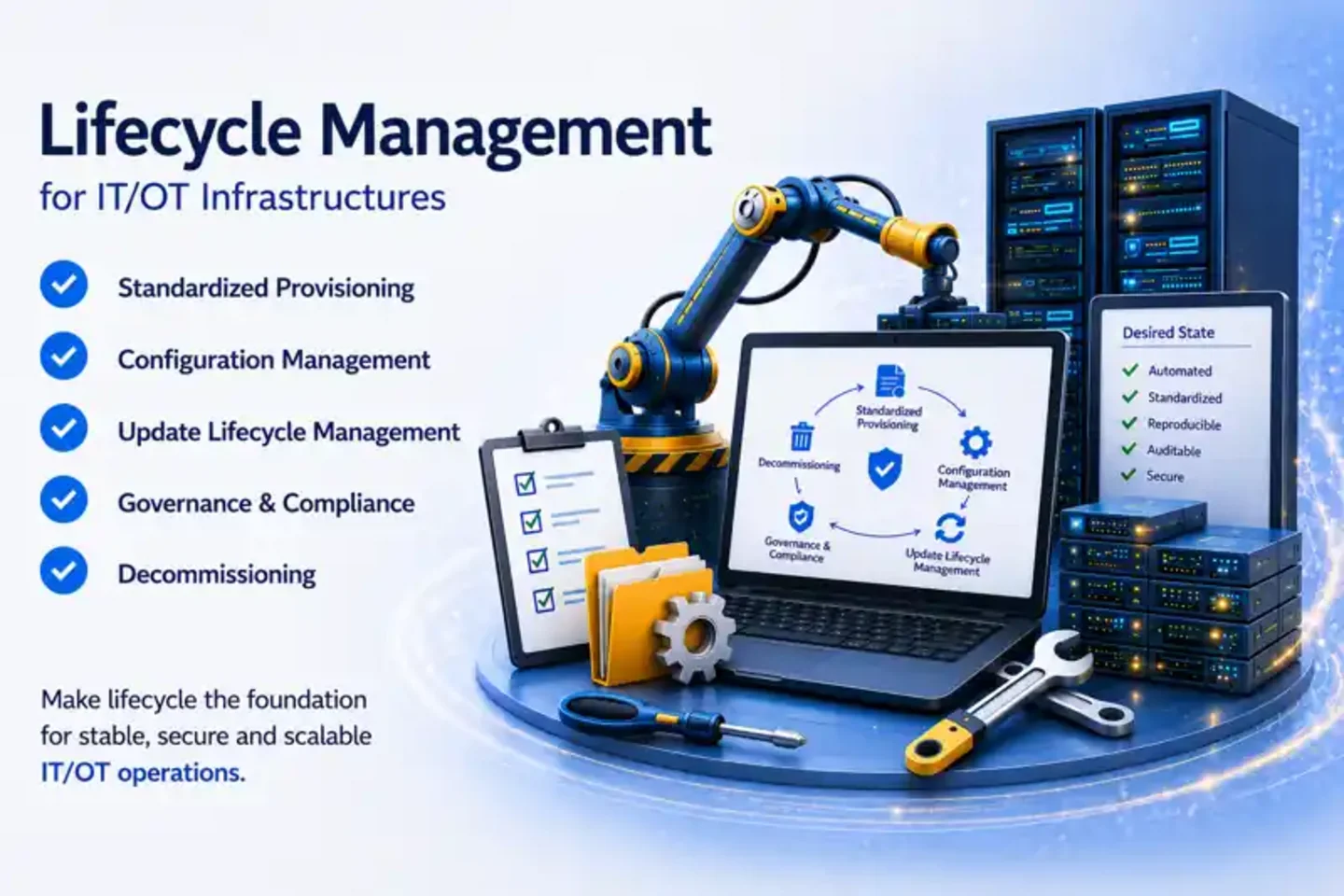
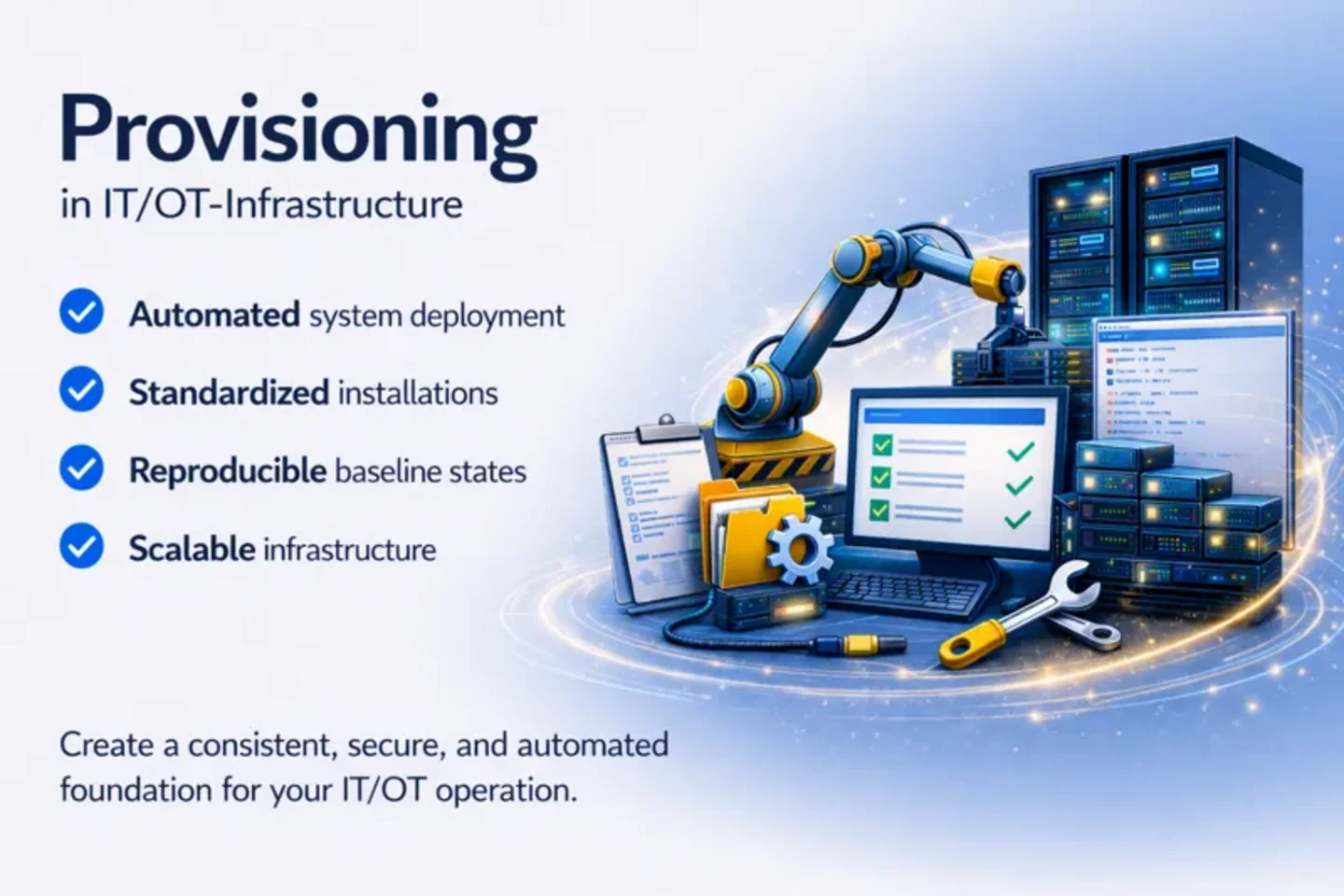
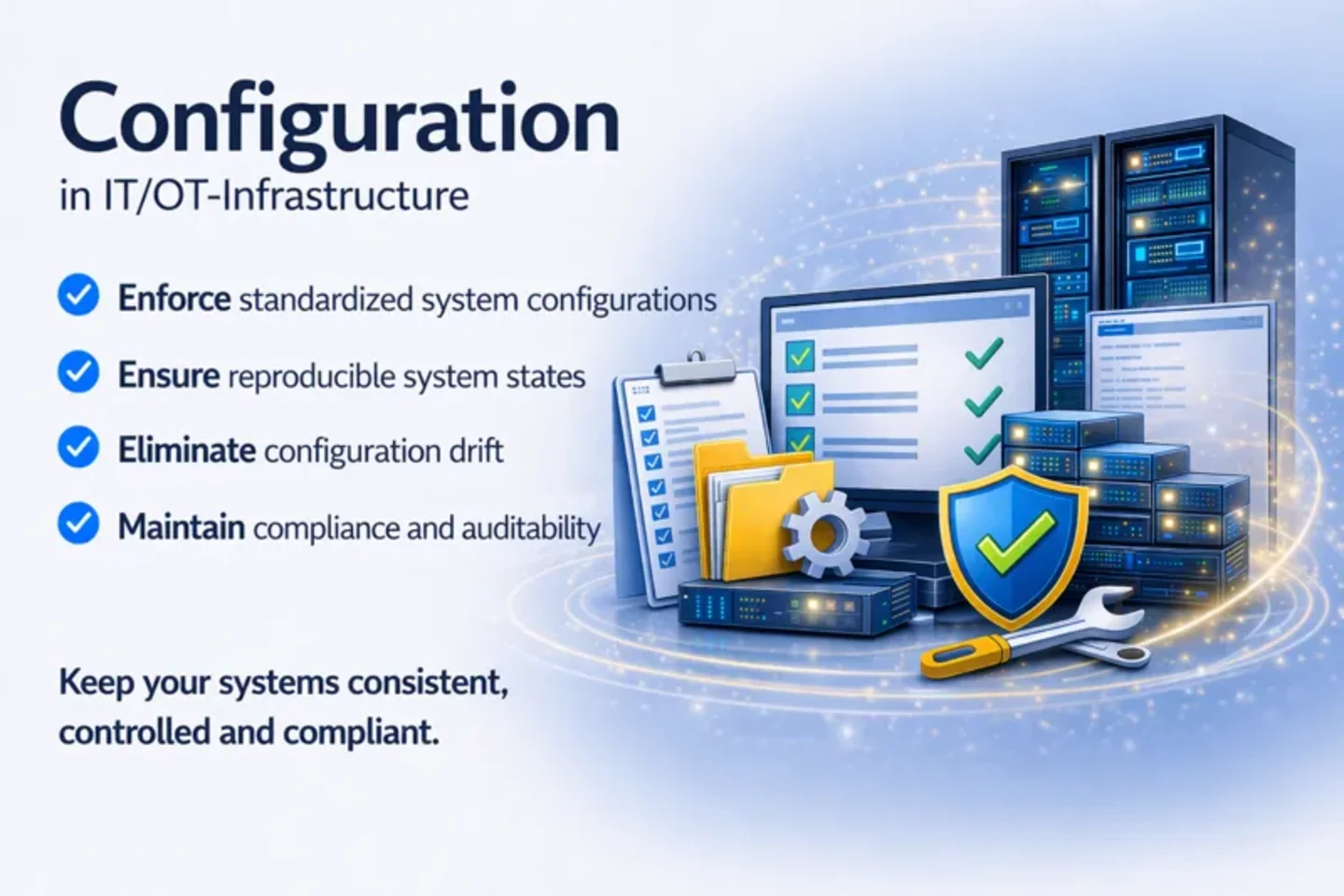
Explore the IT/OT Lifecycle
Validate Update Lifecycle Management - before updates become a risk
Controlled and predictable update processes can be established across your entire environment.
See how UPTR implements Update Lifecycle Management across the entire IT/OT Lifecycle.
Within 30 days, UPTR demonstrates how updates can be validated, orchestrated and continuously aligned with a defined desired state - predictable, traceable and designed to reduce operational risk.