Configuration Management
IT/OT Configuration Management ensures that systems consistently adhere to approved configurations.
With distribution across various locations and environments, maintaining uniform system states manually is becoming increasingly complex.
Without continuous monitoring, minor deviations accumulate, complicating changes, updates, and root cause analysis.
To see how consistency is maintained in practice, it is important to understand how Configuration Management works.
What is Configuration Management

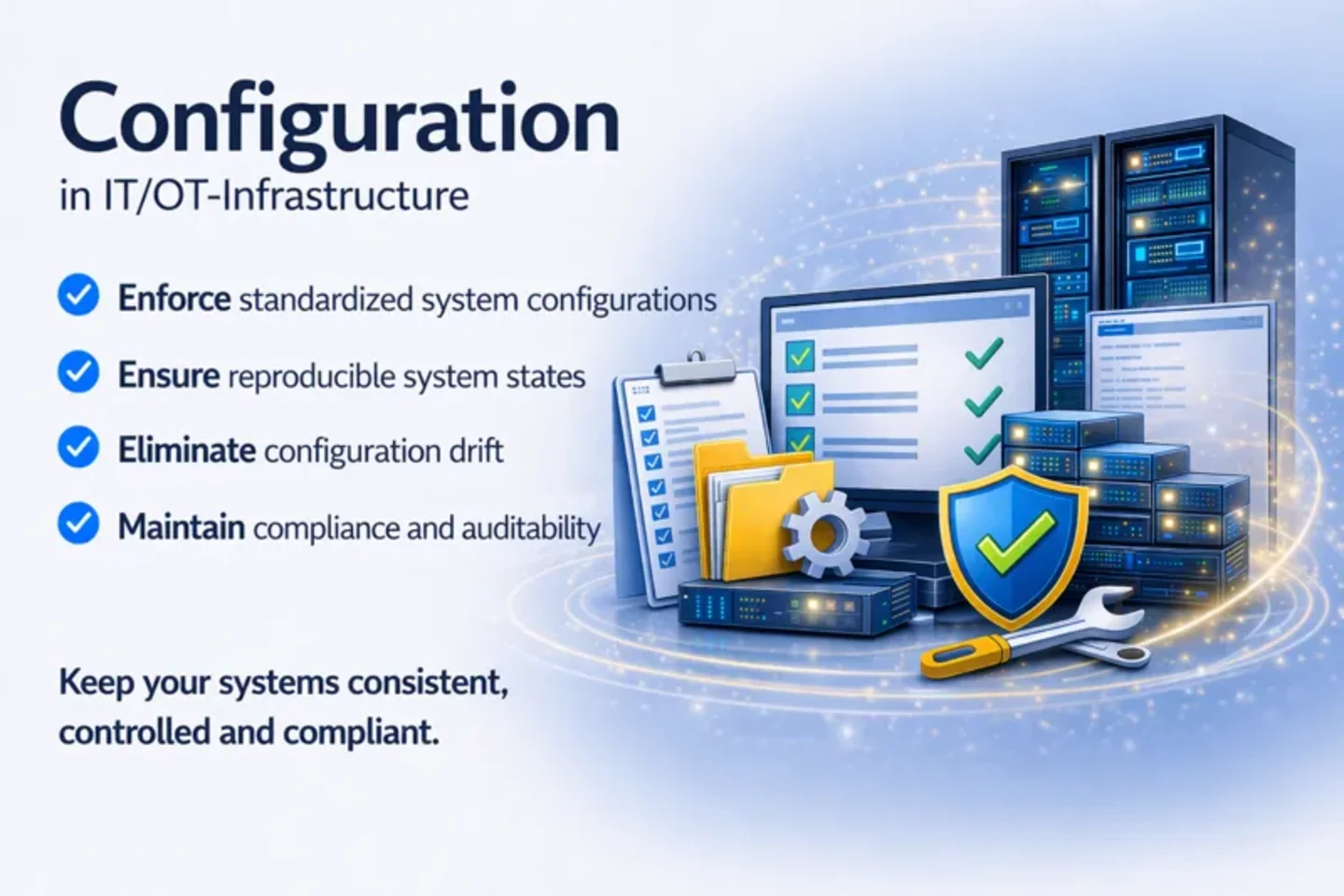
Configuration Management describes how system configurations are defined, managed, and continuously enforced.
Instead of manually adjusting systems, configurations are centrally controlled and applied consistently.
In IT/OT environments, Configuration Management is a continuous process for standardizing and validating system configurations.
How Configuration Management works:
🔹 approved Target States: Systems adhere to a centrally defined target state.
🔹 continuous Enforcement: Deviations are automatically detected and corrected.
🔹 standardized Configurations: Uniform configurations across distributed environments.
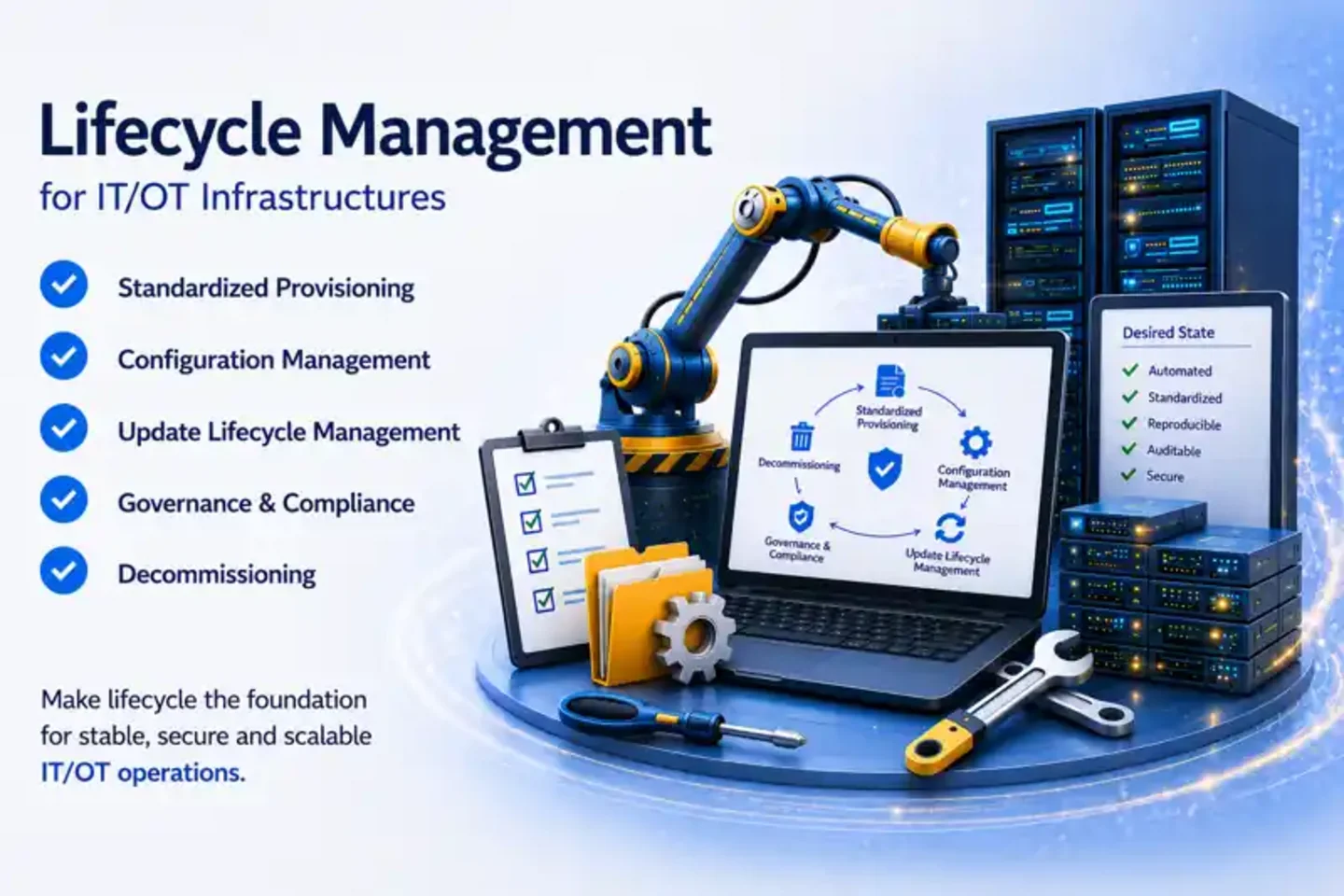
It forms the foundation for coordinated updates and Lifecycle processes.
Why Configuration Management becomes critical in IT/OT environments
In IT/OT environments, systems are distributed across multiple locations, often without direct human oversight.
Without continuous validation, configuration deviations between environments will emerge over the long term.
Without a structured approach, organizations face:
🔸 uncontrolled configuration drift
🔸 inconsistent system behavior despite identical requirements
🔸 unstable foundation for updates and changes
Only a continuous and state-oriented approach enables standardized configurations across distributed environments.
Configuration Management in the IT/OT Lifecycle
Configuration Management ensures that systems remain consistent after Provisioning and throughout their whole IT/OT Operations Lifecycle:
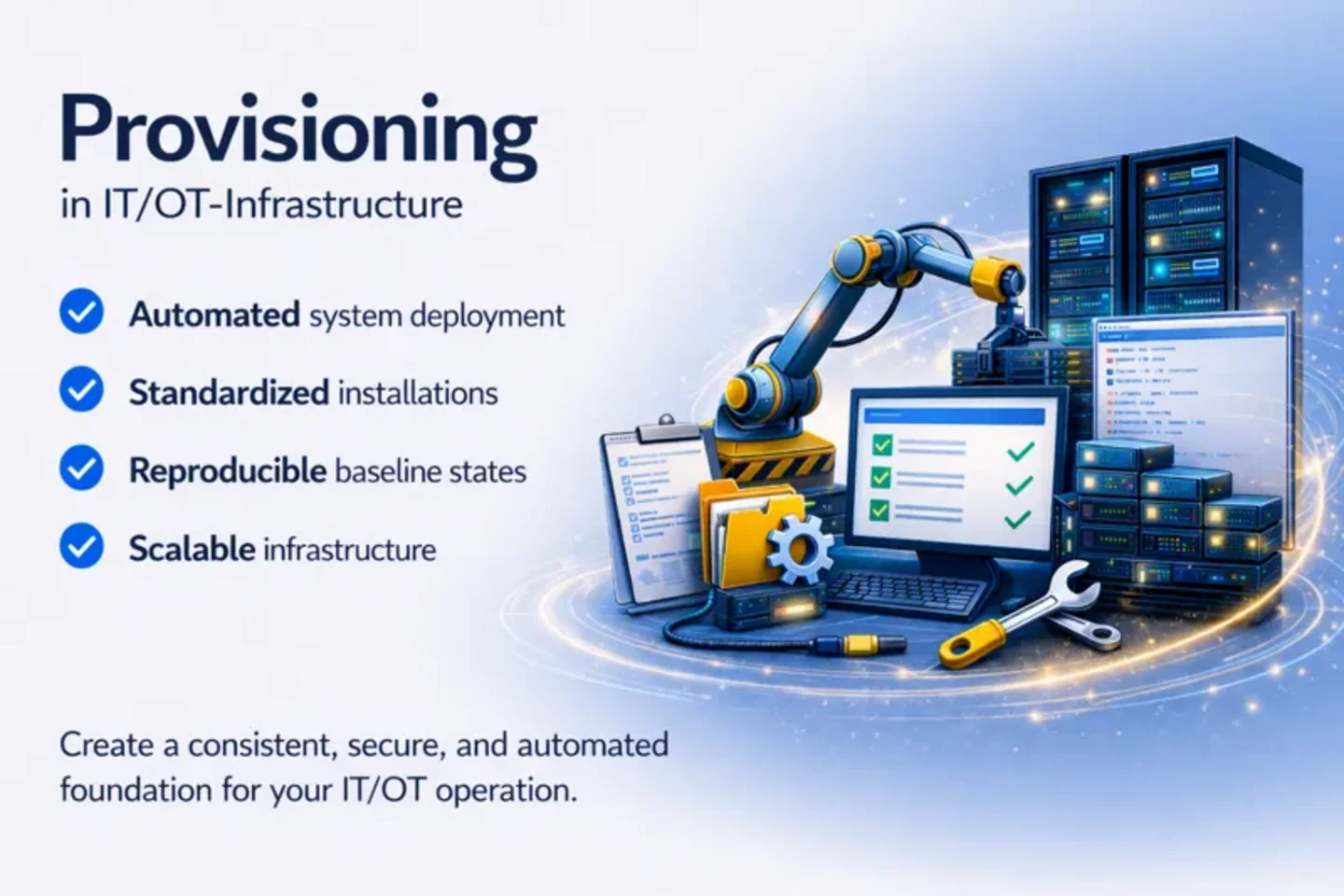
🔹 System Provisioning: establishes the initial baseline
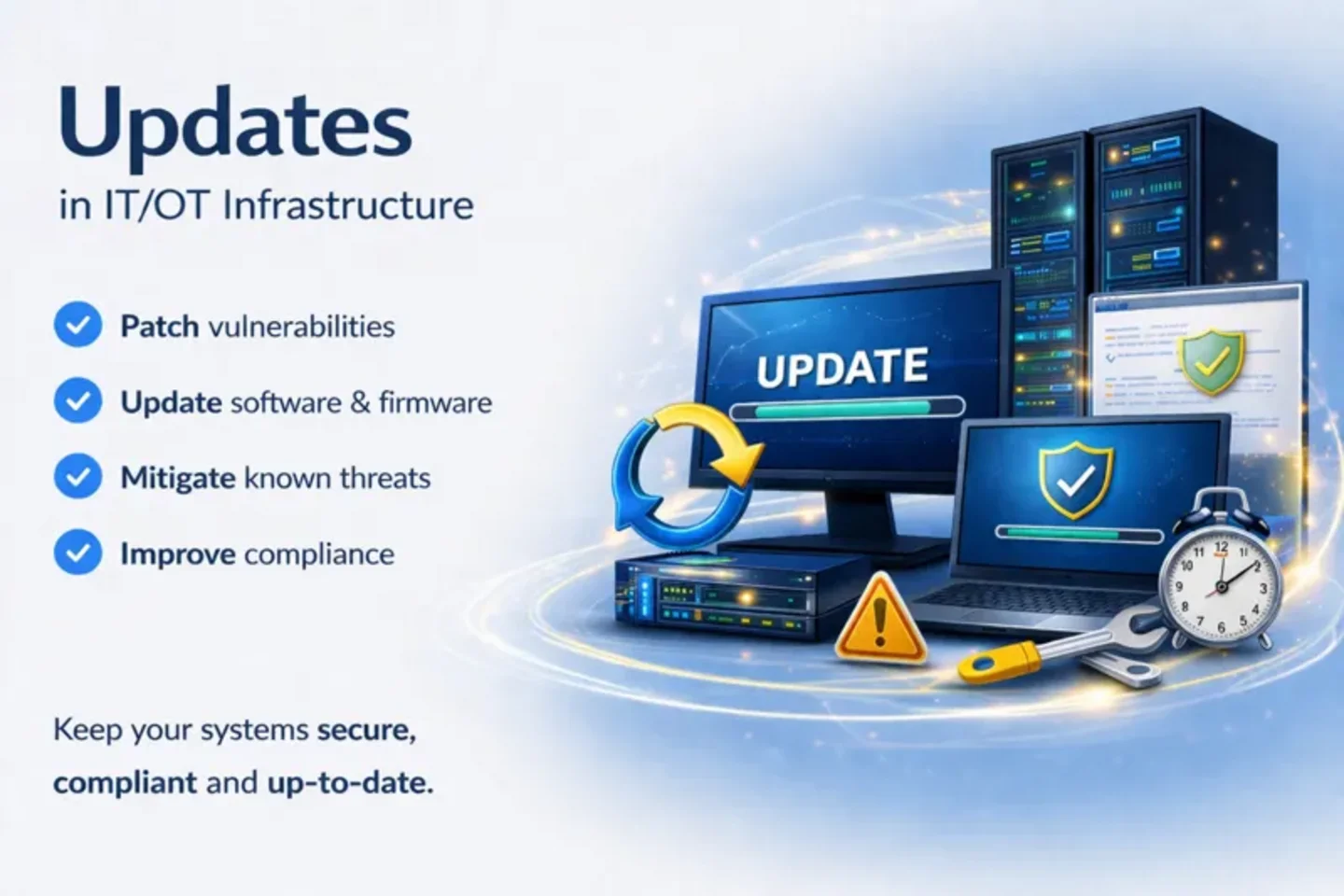
🔹 Update Lifecycle Management: applies controlled updates
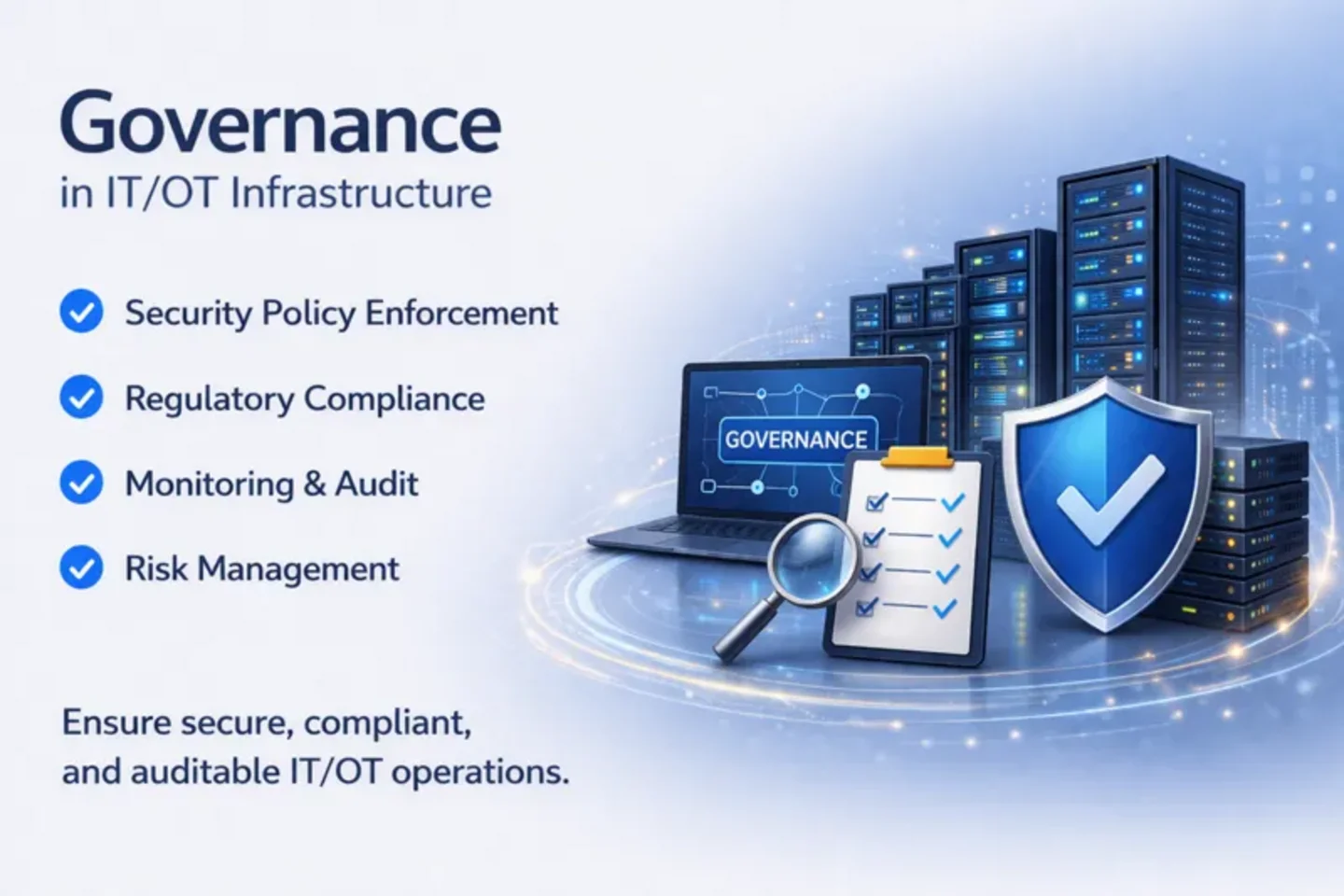
🔹 Governance: enforces policies and compliance
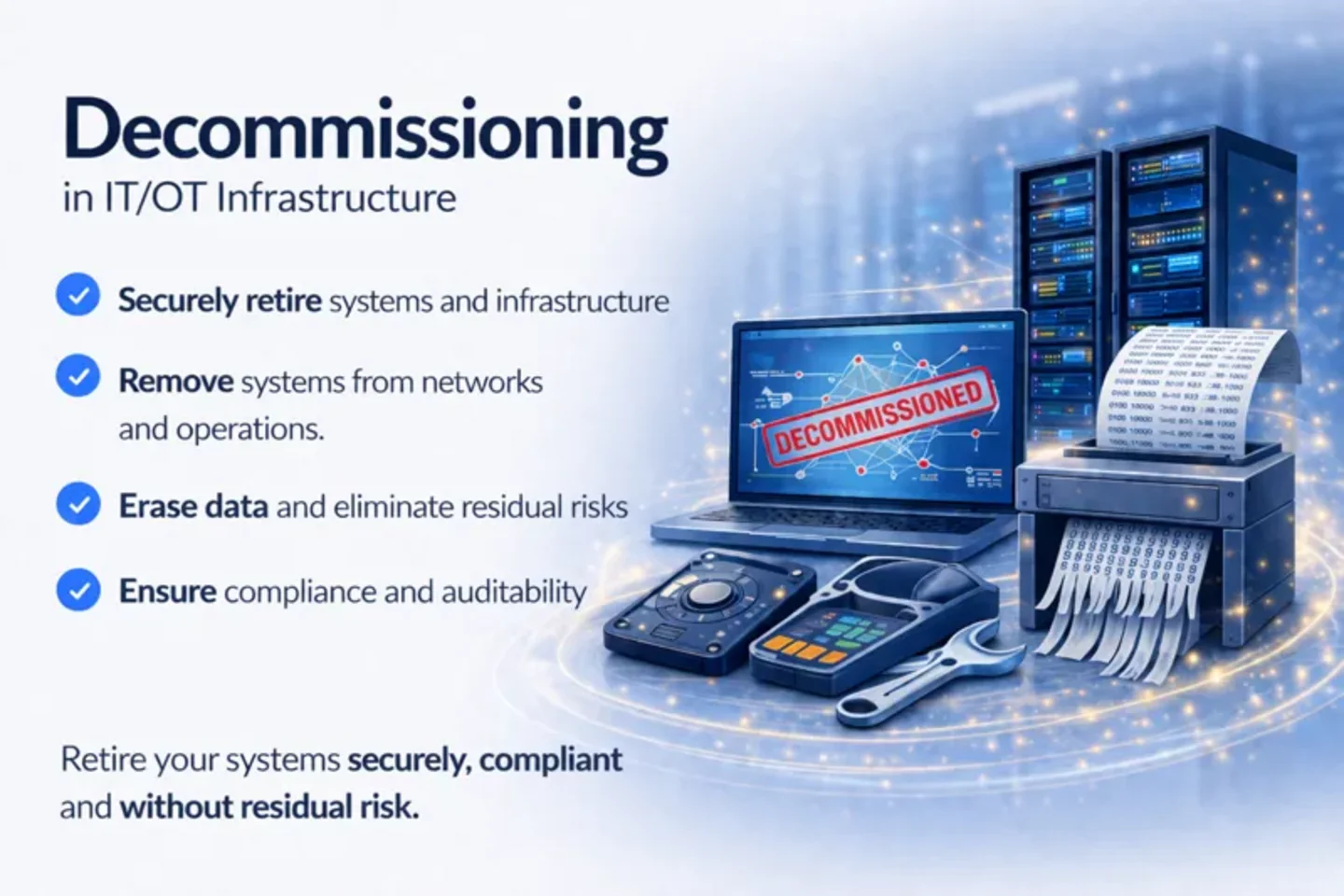
🔹 Decommissioning: ensures controlled system retirement
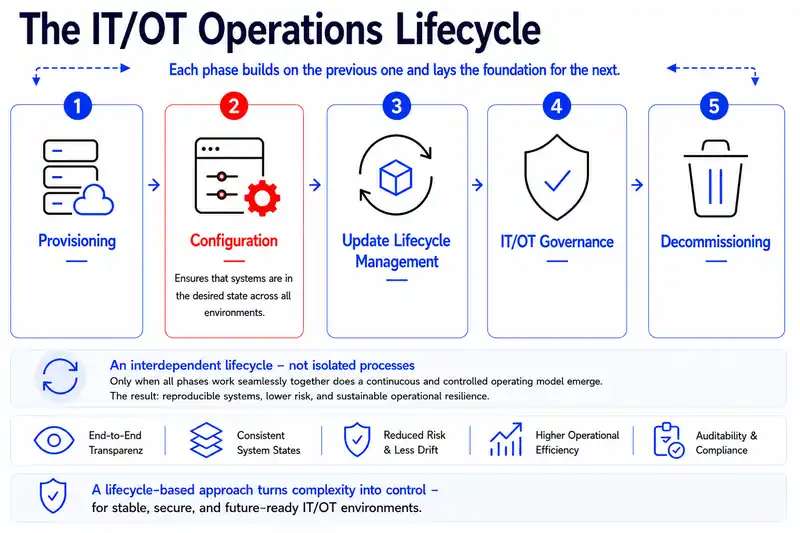
Configuration Management continuously validates systems against approved configurations throughout their entire Lifecycle.
Configuration policies are centrally defined, version-controlled and automatically enforced across distributed environments. Configuration changes remain coordinated and reproducible throughout the Lifecycle.
Instead of manually maintaining individual systems, Configuration Management becomes a continuous operational process integrated into the entire IT/OT Lifecycle. Approved configurations are rolled out consistently across distributed environments, reducing operational complexity.
System states are continuously validated against approved configurations so deviations can be identified and corrected automatically across distributed environments.
Configuration Management establishes the baseline required for coordinated updates and Lifecycle Governance across distributed IT/OT environments.
Benefits of state-driven Configuration Management
👉 State-based Configuration Management standardizes configuration processes across distributed environments.
👉 Coordinated configuration changes simplify troubleshooting and reduce environment-specific inconsistencies across distributed IT/OT environments.
Result: Standardized configuration operations
Lifecycle-driven Configuration Management standardizes configuration processes across all environments:
✔️ reduced configuration drift
✔️ coordinated configuration changes
✔️ reproducible configuration baselines
Configuration Management establishes the operational foundation for coordinated Updates, Governance processes and scalable Lifecycle operations across distributed environments.
Explore the IT/OT Lifecycle
Validate Configuration Management - before configuration drift becomes a risk
Consistent configurations and defined desired states can be maintained across your entire environment.
See how UPTR implements Configuration Management across the entire IT/OT Lifecycle.
Within 30 days, UPTR demonstrates how Configuration Management continuously aligns systems with a defined desired state - controlled, transparent and fully auditable.