Controlled Decommissioning
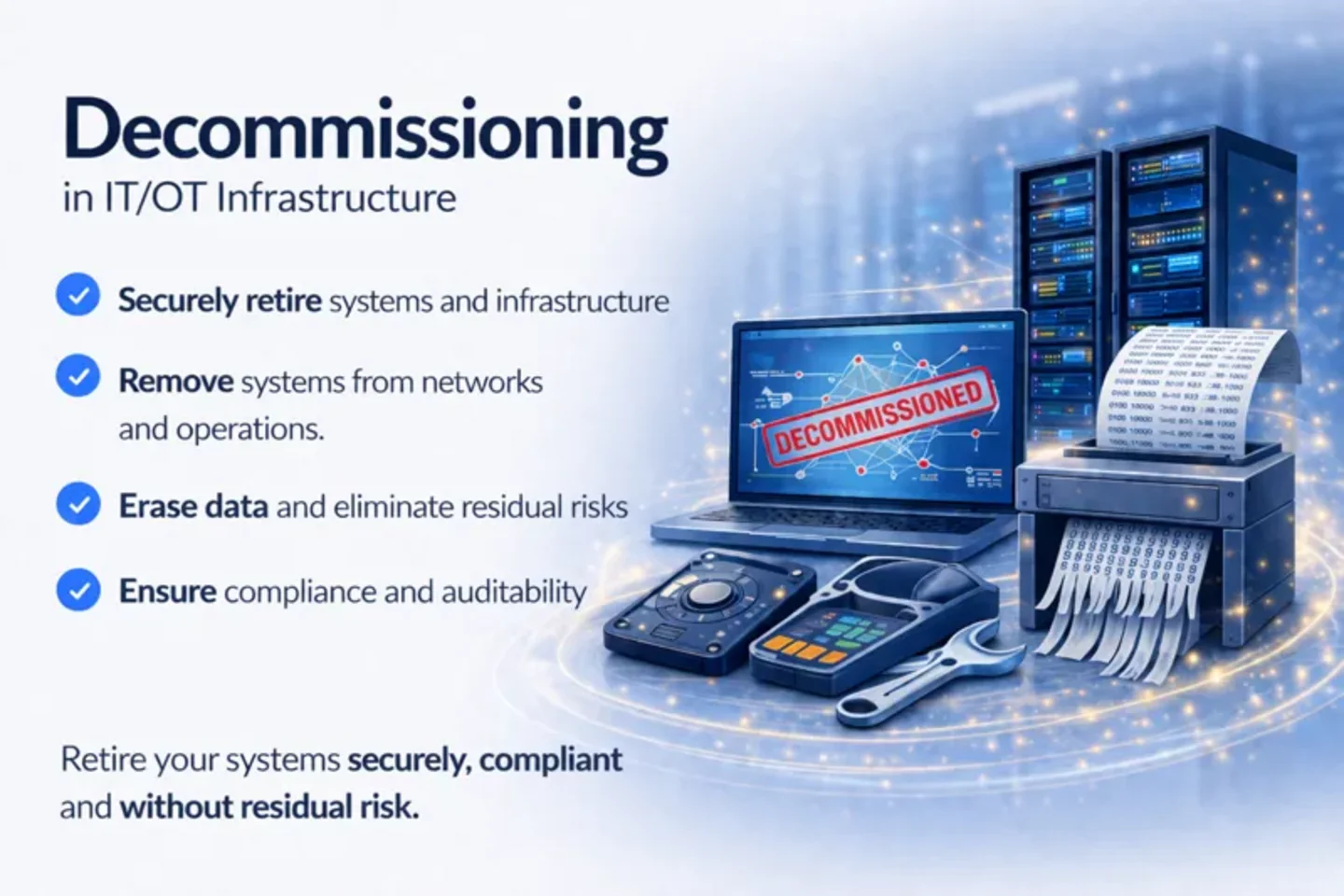
System Decommissioning ensures that IT/OT systems are securely and systematically retired at the end of their lifecycle.
In complex environments, systems often remain active longer than intended, creating hidden risks and unmanaged dependencies.
Without a structured decommissioning process, outdated systems continue to operate unnoticed, increasing security risks and long-term complexity.
To understand how systems are safely retired, it is essential to look at how decommissioning is managed in practice.
What is System Decommissioning

System Decommissioning defines how systems are securely and systematically retired at the end of their lifecycle.
The goal is to remove systems in a controlled way and eliminate risks from legacy systems.
In IT/OT environments, decommissioning is a critical part of a complete lifecycle.
How System Decommissioning works:
🔹 Planned shutdown: Systems are retired in a controlled manner
🔹 Secure data removal: Data is removed safely and in compliance
🔹 Documentation: The process is fully traceable
In distributed IT/OT environments, structured decommissioning prevents unmanaged legacy systems.
It ensures a clean and secure Lifecycle closure.
Why System Decommissioning becomes critical in IT/OT environments
In modern IT/OT environments, the Lifecycle does not end with operations - it ends with a controlled, secure and traceable Decommissioning.
Decommissioning is a critical phase of the IT/OT Lifecycle that is often underestimated, despite carrying significant operational and security risks. Systems frequently remain active longer than intended, turning into unmanaged legacy assets and creating hidden vulnerabilities across the infrastructure.
Without structured Decommissioning, systems remain uncontrolled and become a growing security and compliance risk.
In practice, this leads to:
🔸 Outdated systems remaining active unnoticed
🔸 Security vulnerabilities from unmanaged legacy systems
🔸 Growing technical debt and operational complexity
🔸 Compliance risks and missing audit transparency
🔸 Uncontrolled operational and infrastructure costs
Controlled System Decommissioning ensures that systems are securely retired, dependencies are cleanly resolved, and data is handled according to operational and compliance requirements.
Risks of uncontrolled System Decommissioning in IT/OT Environments.
Uncontrolled Decommissioning often leads to:
🔸 Undiscovered Security risks: Outdated systems remain active on the network, providing attack vectors.
🔸 Compliance violations (e.g., GDPR, KRITIS): Data is not properly deleted or archived.
🔸 Opaque dependencies: Systems are shut down even though they are still needed.
🔸 Costs due to shadow IT: Infrastructure continues to run even though it no longer delivers business value.
Especially in critical infrastructures, Decommissioning is not a simple ‘shutdown’, but a regulated process with clear requirements:
🔹 Traceability of all steps (audit trail)
🔹 Documented data deletion or archiving
🔹 Ensuring the operational stability of remaining systems
🔹 Consideration of OT dependencies (machines, sensors, production lines)
An error in Decommissioning can have not only IT repercussions but also cause real operational disruptions.
System Decommissioning in the IT/OT Lifecycle
System Decommissioning completes the IT/OT Operations Lifecycle and ensures that systems are retired in a controlled and compliant manner.
🔹 System Provisioning: establishes the baseline
🔹 Configuration Management: maintains consistent system states
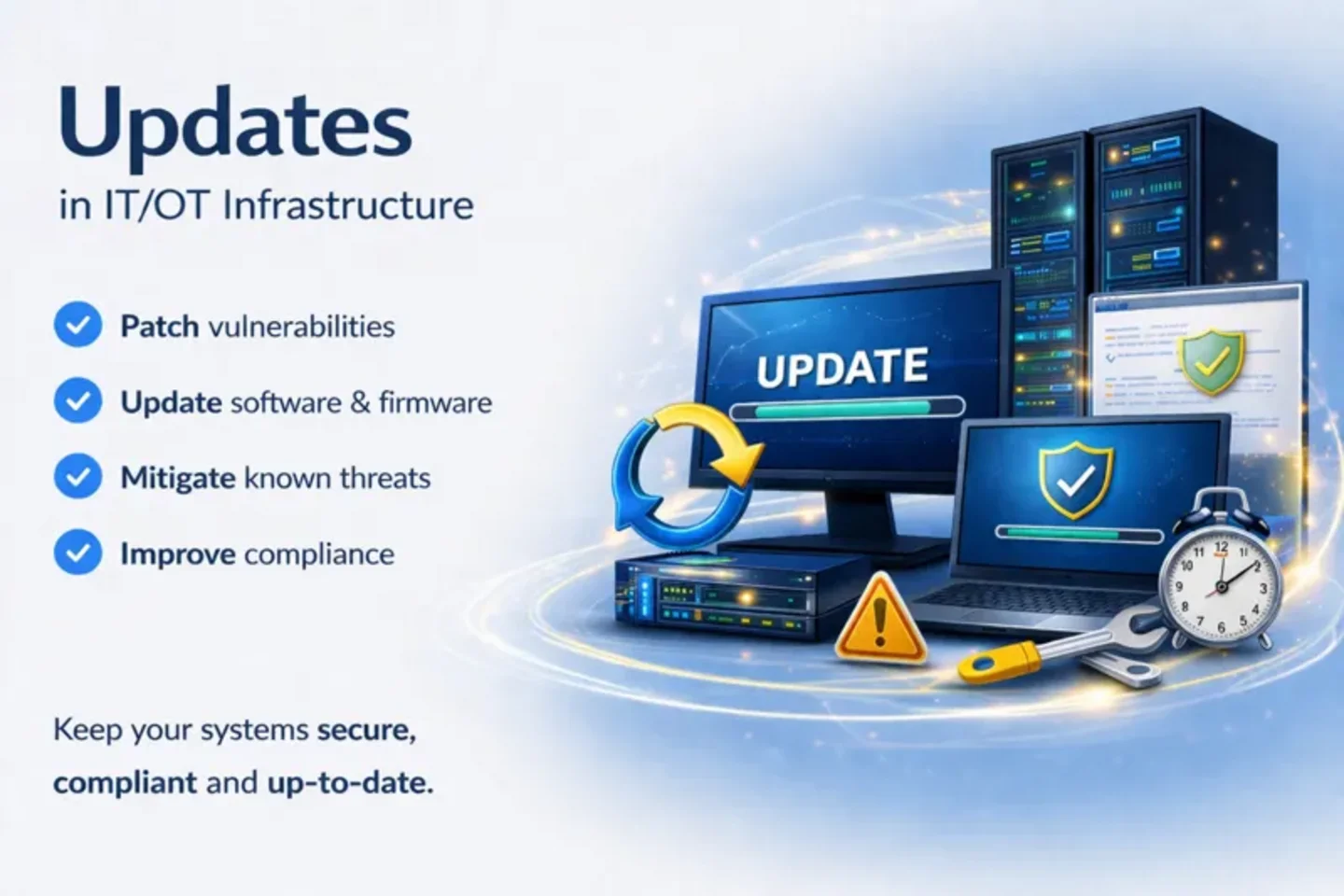
🔹 Update Lifecycle Management: ensures controlled updates
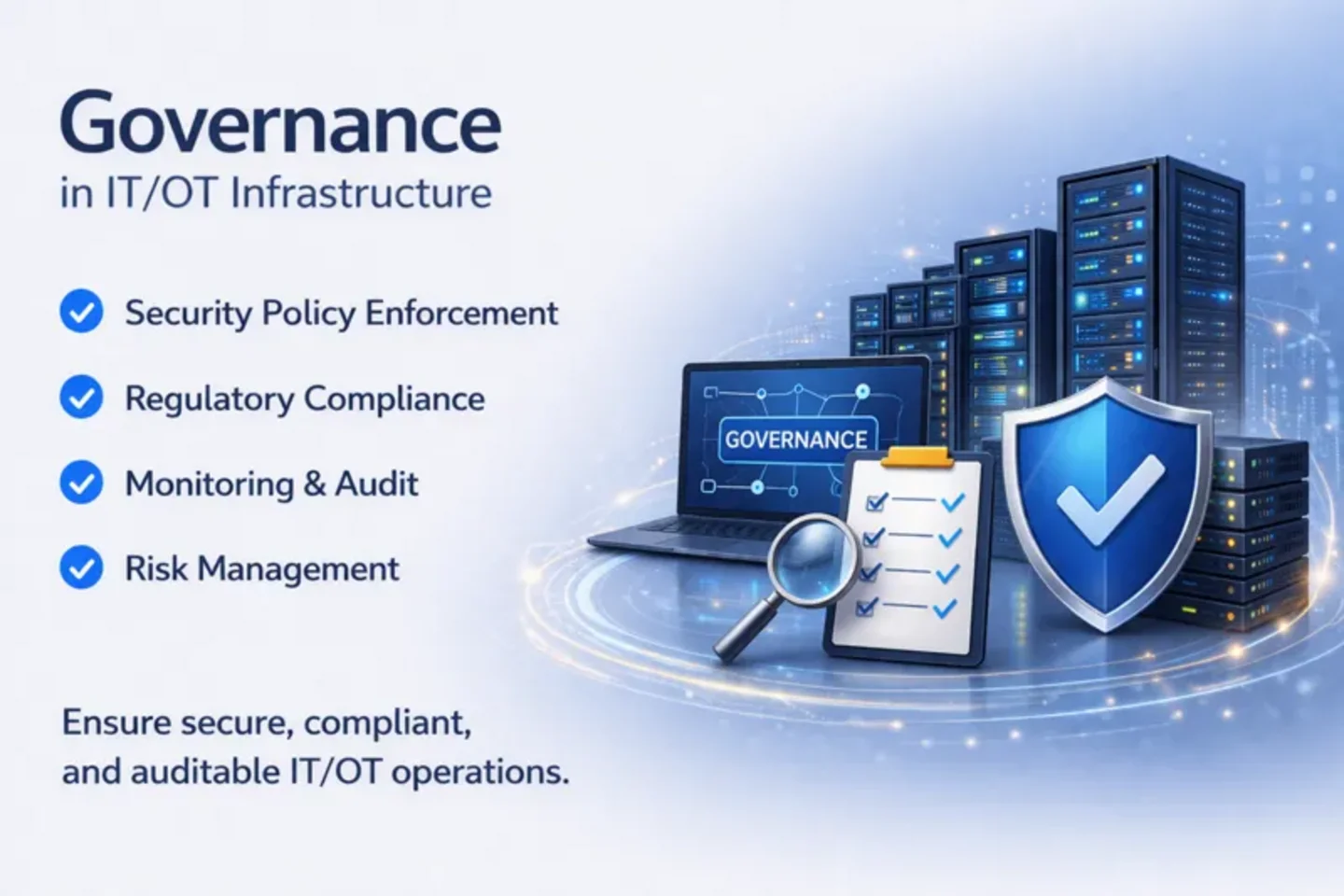
🔹 Governance: enforces policies and compliance
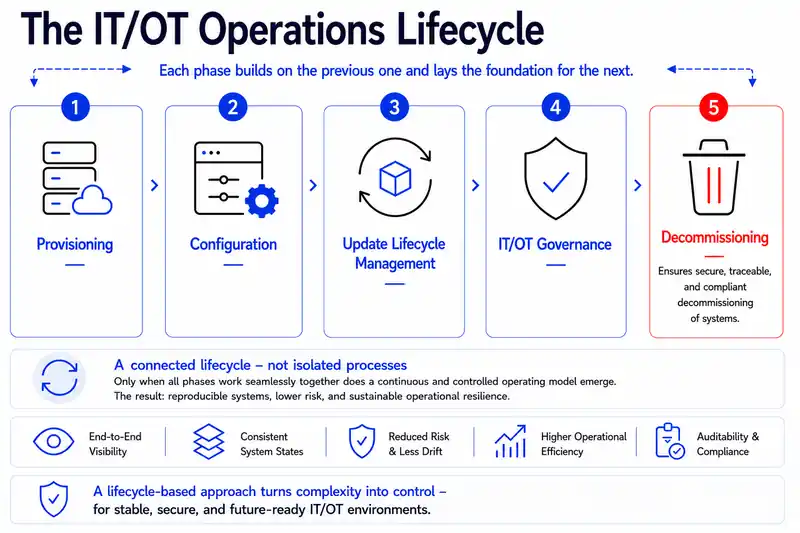
Decommissioning is integrated into the Lifecycle as a controlled and automated process. Systems are systematically retired, ensuring that all components are removed, data is handled securely and all actions are fully documented.
Effective Decommissioning depends on complete visibility throughout the entire Lifecycle.
Based on a documented history of:
✔️ Initial System Provisioning
✔️ Consistent Configuration states
✔️ Update and Patch histories
✔️ Compliance and Audit trails
organizations maintain full visibility across the entire system Lifecycle.
Instead of simply shutting systems down, controlled Decommissioning eliminates hidden risks and ensures a secure and audit-ready Lifecycle closure.
Decommissioning follows defined policies and workflows, ensuring consistency, compliance and full traceability across all environments.
Benefits of controlled Decommissioning
Controlled System Decommissioning ensures that infrastructure is retired without leaving risks or inconsistencies behind. By managing Decommissioning centrally, organizations maintain full control over system retirement.
👉 secure and complete system removal
👉 full traceability of all actions
👉 reduced security and compliance risks
👉 simplified lifecycle management
Decommissioning becomes a controlled and transparent process rather than a source of uncertainty.
Result: Secure and compliant system retirement
With Lifecycle-driven System Decommissioning, organizations ensure that systems are removed safely and without residual risks.
✔️ Secure system retirement
✔️ Full compliance and traceability
✔️ Reduced operational risks
✔️ Clean and controlled infrastructure
System Decommissioning becomes a critical component of secure and scalable IT/OT operations. Together with IT/OT Governance, Decommissioning ensures that all Lifecycle phases remain controlled, compliant and fully traceable.
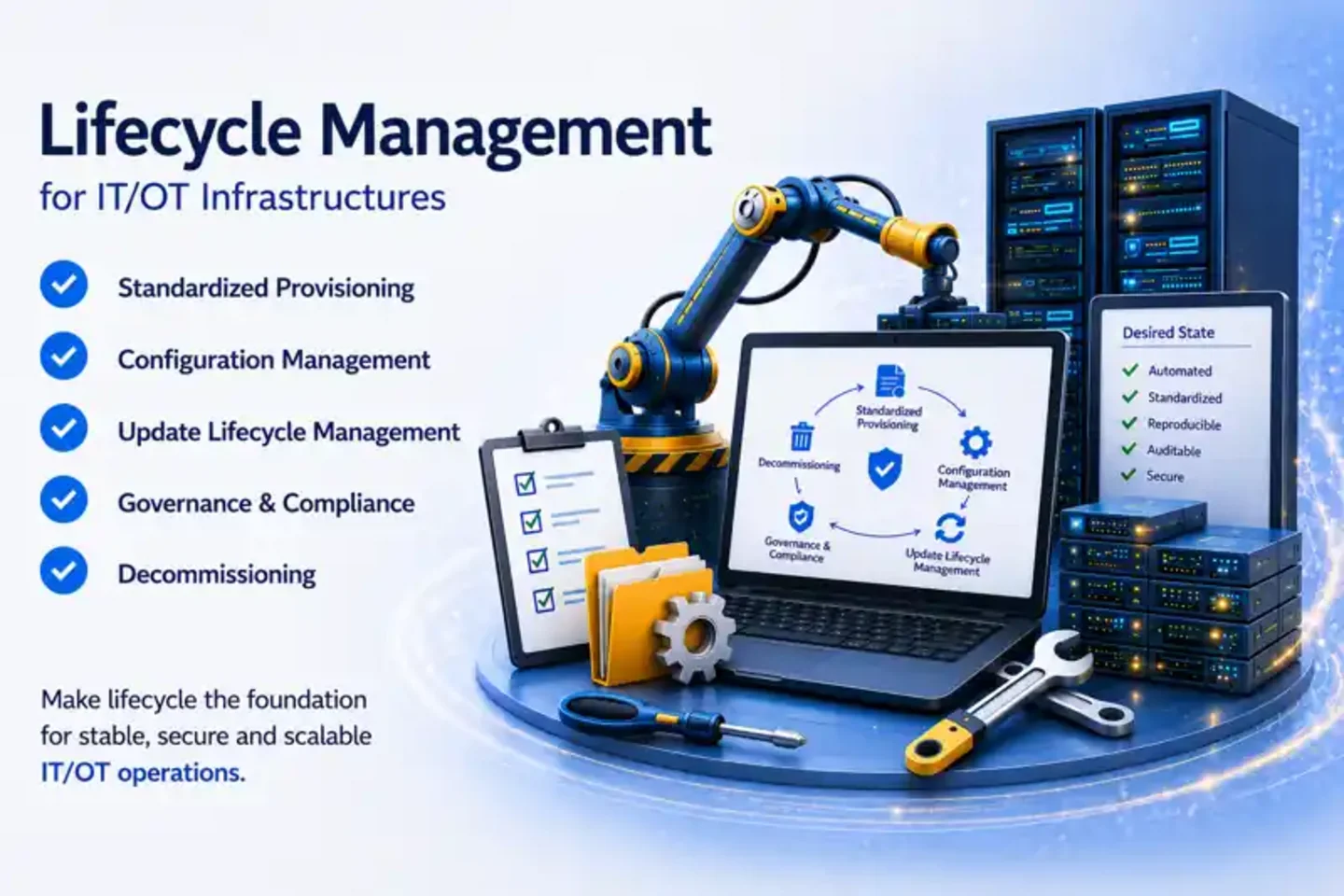
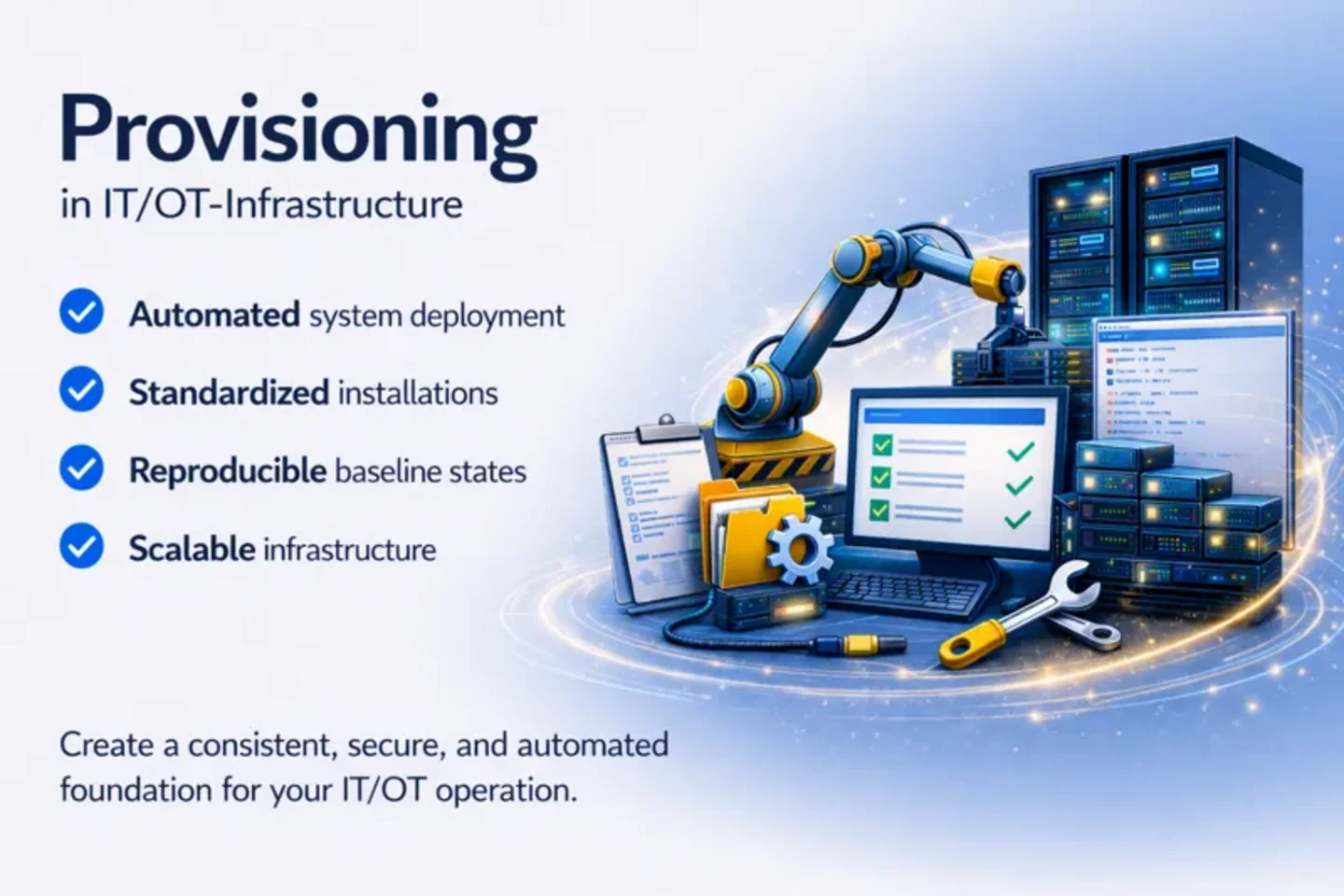
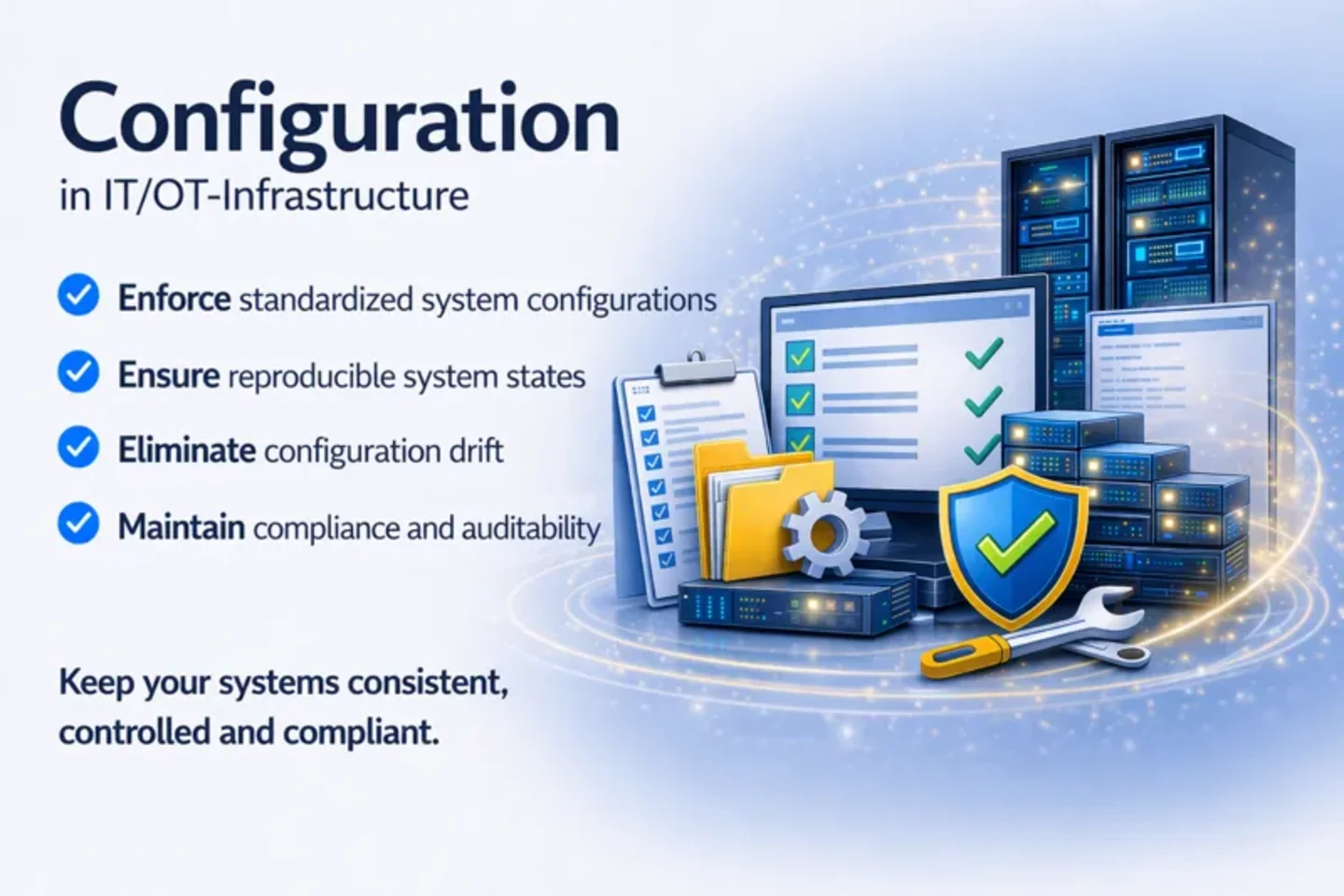
Explore the IT/OT Lifecycle
Validate System Decommissioning - before uncontrolled retirement becomes a risk
Controlled and traceable decommissioning processes can be established across your entire environment.
See how UPTR implements System Decommissioning across the entire IT/OT Lifecycle.
Within 30 days, UPTR demonstrates how systems can be systematically retired through defined workflows and policies - compliant, documented and designed for a secure Lifecycle closure.